Oil-Free Wellness Kitchen: 10 Healing Recipes
Oil-Free Steamed Urad Dal Dumplings with Herbal Gravy
(High-Protein | Gut-Friendly | Diabetic-Friendly | Weight-Supportive)
Serving Size: 1 bowl (2–3 dumplings with gravy)
Cooking Method: Steaming + Slow Cooking (No Oil)
Ingredients
For Steamed Dumplings
-
Urad dal (split, skinned) – 50 g
-
Spinach (palak), finely chopped – 10 g
-
Fresh coriander leaves – 10 g
-
Cumin seeds – 0.5 g
-
Salt – as per taste
-
Optional: Fenugreek leaves / Moringa leaves – 5 g
For Gravy
-
Onion (ground) – 20 g
-
Tomato (ground) – 30 g
-
Green chilli paste – 10 g
-
Ginger paste – 10 g
-
Garlic paste – 10 g
-
Coriander powder – 1 g
-
Turmeric powder – 1 g
-
Cumin powder – 2 g
-
Garam masala – 1 g
-
Salt – 2 g
-
Water – as required
Preparation Method
Step 1: Dumpling Preparation
-
Wash urad dal 3–4 times and soak for 5–6 hours.
-
Grind with minimal water to form a thick batter.
-
Add spinach, coriander, cumin seeds, and salt. Mix well.
-
Place batter on a muslin cloth inside a steamer.
-
Steam for 10–15 minutes until soft and cooked.
-
Remove and allow to cool. Keep aside.
Step 2: Gravy Preparation (Oil-Free Method)
-
Heat a clay or thick-bottom vessel.
-
Dry roast cumin seeds on low flame.
-
Add ground onion and sauté on low flame, stirring continuously.
-
Add tomato, ginger, garlic, and green chilli paste.
-
Add spices and cook slowly.
-
Use plate-with-water (steam regulation method) on the lid to prevent burning.
-
After 5–7 minutes, add water and simmer until gravy thickens.
-
Add steamed dumplings and cook for another 3–5 minutes.
-
Switch off flame and serve warm.
Nutritional Value (Approx. per Serving)
| Nutrient | Amount |
|---|---|
| Energy | 220–250 kcal |
| Protein | 14–16 g |
| Carbohydrates | 28–30 g |
| Dietary Fiber | 7–9 g |
| Fat | 2–3 g (Natural, no added oil) |
| Iron | 4–5 mg |
| Calcium | 120–150 mg |
| Potassium | 400–450 mg |
| Vitamin A | High (from spinach) |
| Vitamin C | Moderate (from tomato & coriander) |
Therapeutic Benefits
Urad Dal
-
Excellent plant protein
-
Supports muscle strength
-
Improves gut health
-
Helps stabilize blood sugar
Spinach & Herbs
-
Rich in iron and antioxidants
-
Supports detoxification
-
Improves hemoglobin levels
Steaming Method
-
Preserves nutrients
-
Easy to digest
-
Ideal for diabetes, PCOS, fatty liver, weight loss
Oil-Free Cooking
-
Reduces inflammation
-
Supports heart health
-
Prevents acidity and bloating
Who Can Consume This Dish?
Diabetics
Weight-loss clients
Fatty liver patients
PCOS & hormonal imbalance
Elderly & digestive issues
Post-illness recovery
Pro Tip (Holistic Touch)
-
Best consumed at lunch
-
Pair with lemon water or cumin water
-
Avoid at night for weak digestion
Little Millet Kheer (Oil-Free | Dairy-Free | Gut-Friendly Dessert)
(Diabetic-friendly • Weight-supportive • Seasonal nourishment)
Serving Size: 1 bowl (150–180 ml)
Cooking Method: Soaking + Open Cooking + Double Boiler Warming
Ingredients
-
Little millet (soaked & cooked) – 25 g (raw weight)
-
Coconut milk (fresh, homemade) – 150 ml
-
Dates (soaked & paste) – 2–3 small dates (15 g)
-
Fennel seeds (crushed, optional) – 0.5 g
-
Water – as required
Preparation Method
Step 1: Millet Preparation
-
Wash little millet 3–4 times.
-
Soak:
-
Summer: 5–6 hours
-
Winter: 8–9 hours
-
-
Cook soaked millet in an open vessel with 4–5 times water until soft.
-
Transfer cooked millet to a bowl.
Step 2: Coconut Milk Preparation
-
Take 20–25 g fresh coconut.
-
Blend with warm water.
-
Strain to get 150 ml fresh coconut milk.
Step 3: Kheer Preparation
-
Add coconut milk to cooked millet.
-
Mix well and adjust consistency.
-
Add date paste as a natural sweetener.
-
Add crushed fennel seeds (optional).
Step 4: Warming Method (Winter Use)
-
Use Double Boiler Method:
-
Heat water in a vessel.
-
Place the kheer bowl on top (no direct flame).
-
Warm for 2–4 minutes using steam.
-
-
This preserves nutrients and fat structure of nut milk.
Nutritional Value (Approx. per Serving)
| Nutrient | Amount |
|---|---|
| Energy | 210–230 kcal |
| Carbohydrates | 32–35 g |
| Protein | 5–6 g |
| Fat | 7–9 g (Good fats from coconut) |
| Dietary Fiber | 6–7 g |
| Iron | 2.5–3 mg |
| Magnesium | 60–70 mg |
| Potassium | 350–400 mg |
| Calcium | 40–50 mg |
| Zinc | 1.2 mg |
| Glycemic Load | Low–Moderate |
Therapeutic & Holistic Benefits
Little Millet
-
Low glycemic index
-
Improves insulin sensitivity
-
Rich in fiber → supports gut & weight loss
-
Strengthens nerves and metabolism
Coconut Milk
-
Provides medium-chain fatty acids (MCFA)
-
Easy digestion
-
Supports brain & hormonal health
Dates (Natural Sweetener)
-
Rich in iron & potassium
-
No refined sugar spikes
-
Improves energy & bowel movement
Fennel Seeds
-
Reduces bloating & gas
-
Enhances digestion
-
Cooling effect for the gut
Who Can Consume This Kheer?
Diabetics (controlled portions)
PCOS & hormonal imbalance
Fatty liver patients
Gut & acidity issues
Weight-loss clients
Elderly & children (6+ yrs)
Best Time to Consume
-
Morning or Lunch Dessert
-
Avoid at night for weak digestion
Clinical Tip
-
Diabetics: limit to ½ serving
-
Add cardamom instead of dates if sugar needs strict control
Oil-Free Aloo Gobi (Potato & Cauliflower Sabzi)
(Winter Special • Heart-Friendly • Gut-Friendly • Weight-Supportive)
Serving Size: 1 bowl (180–200 g)
Cooking Method: Slow sauté + Steam regulation (Water-on-Lid Method)
Cookware: Clay pot / Thick-bottom vessel
Ingredients
-
Potato (aloo), chopped – 150 g
-
Cauliflower (gobi), chopped – 150 g
-
Onion, chopped – 20 g
-
Tomato, chopped – 40 g
-
Ginger paste – 5 g
-
Garlic paste – 5 g
-
Green chilli paste – 5 g
-
Cumin seeds – 1 g
-
Turmeric powder – 1–2 g
-
Garam masala – 1 g
-
Salt – 2–3 g (as per taste)
-
Fresh coriander leaves – 5 g
-
Water – as required (sprinkling + steaming plate)
Preparation Method
Step 1: Vegetable Safety Prep
-
Since vegetables are non-organic, soak them in water with refined salt for 15 minutes.
-
This helps reduce up to 80% pesticide residue.
Step 2: Oil-Free Masala Base
-
Heat a clay pot on low flame.
-
Add cumin seeds and roast until crackling sound appears.
-
Add onion and sauté slowly, stirring continuously.
-
Add tomatoes, ginger, garlic, and green chilli paste.
-
If the base becomes dry, sprinkle water to prevent burning.
-
Cook until masala releases aroma.
Step 3: Vegetable Cooking
-
Add chopped potato and cauliflower.
-
Add salt and turmeric.
-
Mix well and cook for 2–3 minutes on low flame.
Step 4: Steam Regulation (Traditional Method)
-
Place a plate with water on the lid (Water-on-Lid / Steaming Plate Method).
-
Cook for 5–7 minutes on very low flame.
-
This:
-
Prevents burning
-
Regulates internal temperature
-
Helps vegetables release natural oils
-
Enhances flavor without added fat
-
Step 5: Final Touch
-
Add garam masala and fresh coriander leaves.
-
Mix gently and switch off flame.
Nutritional Value (Approx. per Serving)
| Nutrient | Amount |
|---|---|
| Energy | 190–210 kcal |
| Carbohydrates | 35–38 g |
| Protein | 5–6 g |
| Fat | 1.5–2 g (no added oil) |
| Dietary Fiber | 7–8 g |
| Vitamin C | 45–50 mg |
| Vitamin B6 | 0.5 mg |
| Potassium | 750–800 mg |
| Magnesium | 45–55 mg |
| Iron | 2–2.5 mg |
| Glycemic Load | Moderate |
Therapeutic & Holistic Benefits
Potato
-
Provides sustained energy
-
Rich in potassium → supports heart & nerve health
-
When oil-free, does not spike cholesterol
Cauliflower
-
High fiber → improves digestion
-
Detox-supportive
-
Anti-inflammatory properties
Spices (Cumin, Ginger, Turmeric)
-
Improve digestion & metabolism
-
Reduce bloating and gas
-
Support immunity and joint health
Oil-Free + Slow Cooking
-
Reduces inflammatory load
-
Protects liver & heart
-
Ideal for lifestyle disease reversal
Who Can Consume This Dish?
Weight-loss clients
Diabetics (portion control)
Fatty liver patients
PCOS & hormonal imbalance
Elderly & gut-sensitive individuals
Best Time to Consume
-
Lunch or early dinner
-
Pair with millet roti / jowar roti / plain rice
Clinical Tip
-
For diabetics: increase gobi, reduce potato ratio
-
Add ajwain if digestion is weak
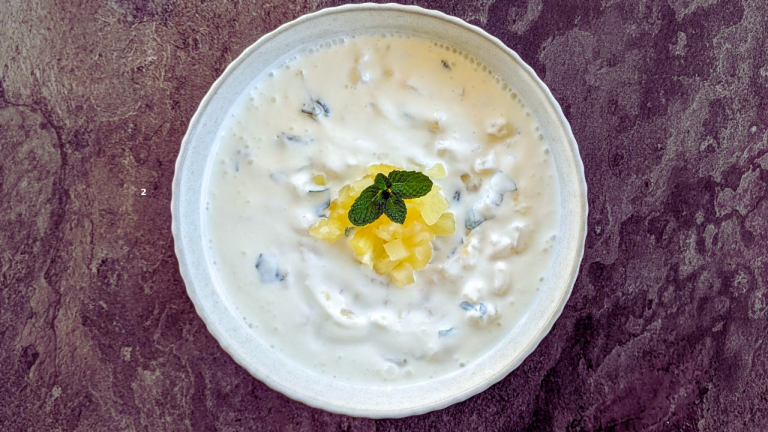
Millet Chaas (Barnyard Millet Buttermilk)
(Digestive, Cooling, Gut-Friendly, Low-Calorie)
Serving Size: 1 glass (~200 ml)
Cooking Method: Boiled millet + Blended nut milk
Cookware: Saucepan + Mixing bowl
Ingredients
| Ingredient | Quantity |
|---|---|
| Barnyard millet (cooked) | 25 g |
| Coconut (fresh, grated) | 25 g |
| Water | 150 ml (for coconut milk) |
| Green peas (steamed) | 30 g |
| Tomato (chopped) | 1 tbsp (~15 g) |
| Green chilli (chopped) | 1–2 g |
| Roasted cumin powder | 1 g |
| Salt | 1–2 g (as per taste) |
| Lemon juice | 5–7 ml (½ small lemon) |
| Fresh coriander leaves | 2–3 g |
Preparation Method
Step 1: Soaking and Cooking Millet
-
Wash barnyard millet 3–4 times.
-
Soak it for 5–6 hours (summer) or 8–9 hours (winter).
-
Boil the soaked millet until soft and fully cooked.
Step 2: Prepare Coconut Milk
-
Take 25 g fresh coconut and blend with 150 ml water.
-
Strain the mixture to extract 100 ml coconut milk.
Step 3: Assemble the Chaas
-
In a mixing bowl, add cooked millet and coconut milk.
-
Add steamed green peas, tomato, and green chilli.
-
Add salt, lemon juice, and roasted cumin powder.
-
Mix well until all ingredients are evenly combined.
-
Garnish with fresh coriander leaves.
-
Serve chilled (summer) or slightly warm (winter).
Nutritional Value (Approx. per Serving)
| Nutrient | Amount |
|---|---|
| Energy | 130–150 kcal |
| Carbohydrates | 22–24 g |
| Protein | 4–5 g |
| Fat | 3–4 g (natural from coconut) |
| Dietary Fiber | 3–4 g |
| Vitamin C | 10–12 mg |
| Calcium | 20–25 mg |
| Iron | 1–1.5 mg |
| Magnesium | 25–30 mg |
| Glycemic Load | Low to moderate |
Holistic & Therapeutic Benefits
-
Barnyard Millet:
-
Easy to digest, supports gut health
-
Stabilizes blood sugar (low glycemic load)
-
Provides essential minerals
-
-
Coconut Milk:
-
Rich in healthy fats for satiety
-
Supports immunity and brain function
-
-
Green Peas & Tomato:
-
Adds fiber, antioxidants, and natural sweetness
-
Supports detoxification
-
-
Cumin, Lemon, & Green Chilli:
-
Boost digestion, improve metabolism
-
Enhance nutrient absorption
-
Who Can Consume
Diabetics (portion-controlled)
People with weak digestion
Those seeking weight management
Children & adults needing light, nutritious snacks
Tips
-
Adjust salt and lemon to taste.
-
For a creamier texture, increase coconut milk slightly.
-
Can be served cold in summer for a refreshing drink.
No-Oil Chana Dal (Oil-Free Cooking)
Servings: 2
Prep Time: 10–15 min (soaking time extra)
Cook Time: 20–25 min
Ingredients
| Ingredient | Quantity | Notes |
|---|---|---|
| Chana Dal (Bengal gram) | 50 g | Soaked for 5–6 hours |
| Water | 400 ml | For boiling dal |
| Cumin seeds | 2 g (½ tsp) | Roasted |
| Onion | 2 tbsp (~30 g) | Finely chopped |
| Tomato | 2 tbsp (~30 g) | Finely chopped |
| Ginger | ½ tsp | Finely chopped |
| Garlic | ½ tsp | Finely chopped |
| Turmeric powder | 1 g (~¼ tsp) | For color & flavor |
| Cumin powder | 1 g (~¼ tsp) | Optional extra ¼ tsp |
| Coriander powder | 1 g (~¼ tsp) | Optional |
| Green chili | 1 small | Finely chopped, optional |
| Salt | 2–3 g (~½ tsp) | To taste |
| Fresh coriander leaves | 1 tsp | For garnish |
| Water (for steaming spices) | 2–3 tbsp | To prevent sticking |
Step-by-Step Instructions
Step 1: Soaking & Boiling Dal
-
Wash 50 g Chana Dal 3–4 times.
-
Soak in water for 5–6 hours (longer for harder legumes like Rajma or Chole – 8–9 hours).
-
Drain and rinse. Boil in 400 ml water with a pinch of salt in a pressure cooker (2–3 whistles) until soft.
-
Remove froth that forms on top during boiling (helps reduce uric acid and improves digestibility). Set aside.
Step 2: Preparing the Spice Base (No-Oil Cooking)
-
Heat a clay pot or heavy-bottomed pan on low heat.
-
Add 2 g cumin seeds and roast lightly until aromatic.
-
Add onion (2 tbsp) and cook lightly. If it starts sticking, sprinkle 1–2 drops of water.
-
Add tomato (2 tbsp) and cook for a few minutes. Again, add water if needed.
-
Add ½ tsp ginger and ½ tsp garlic. Stir well.
-
Add turmeric, cumin powder, coriander powder (1 g each).
-
Add 2–3 tbsp water on a separate plate for steam cooking: place over spices so they cook slowly with steam, releasing their natural oils. Cook for 5–7 minutes on low heat.
Step 3: Combine Dal with Spices
-
Add the boiled Chana Dal to the cooked spices.
-
Cook together for 2–3 minutes on low heat.
-
Check consistency and add a splash of water if needed.
Step 4: Finishing Touch
-
Add green chili (optional), salt to taste, and fresh coriander for garnish.
-
Serve hot with roti, rice, or as a side dish.
Estimated Nutritional Value (per serving, ~125 g)
| Nutrient | Amount |
|---|---|
| Calories | 150 kcal |
| Protein | 9 g |
| Carbohydrates | 22 g |
| Dietary Fiber | 7 g |
| Sugars | 3 g |
| Fat | 0.5 g |
| Saturated Fat | 0.1 g |
| Sodium | 150 mg |
| Iron | 2 mg |
| Calcium | 25 mg |
Notes on Nutrition:
-
High in plant protein and dietary fiber.
-
Low in fat and oil-free, making it heart-friendly.
-
Soaking the dal enhances digestibility and reduces anti-nutrients like phytic acid.
-
Spices provide antioxidants and aid digestion.
No-Oil Millet Khichdi Recipe
Servings: 2
Cooking Time: 30–35 minutes (excluding soaking)
Cuisine: Indian / Healthy / Ayurvedic
Diet: Vegan, Gluten-Free, Oil-Free
Ingredients
Grains & Lentils
-
Foxtail Millet – 20 g (soaked for 5–6 hours in summer, 8–9 hours in winter)
-
Moong Dal (split green gram) – 40 g (soaked 5–6 hours)
Vegetables
-
Onion – 2 tbsp, finely chopped
-
Tomato – 2 tbsp, finely chopped
-
Green chili – 1 medium, chopped
-
Optional: Capsicum (bell pepper) – 2 tbsp, chopped
-
Optional: Green peas – 2 tbsp
Spices
-
Cumin seeds – 2 g
-
Ginger – 1 tsp, finely chopped or grated
-
Garlic – 1 tsp, finely chopped or grated
-
Turmeric – 1/2 tsp (optional)
-
Coriander powder – 1 g
-
Cumin powder – 1 g
-
Garam masala – 2 g
Others
-
Salt – to taste
-
Water – as required for boiling and cooking (approximately 200–250 ml)
-
Fresh coriander – for garnish
Step-by-Step Instructions
Preparation
-
Soak grains and lentils:
-
Rinse foxtail millet and moong dal 3–4 times.
-
Soak foxtail millet for 5–6 hours (summer) or 8–9 hours (winter).
-
Soak moong dal for 5–6 hours.
-
-
Boil millet and dal:
-
Drain soaked millet and moong dal.
-
Boil separately in water until soft. Set aside.
-
Cooking the Khichdi (No-Oil Method)
-
Roast cumin seeds:
-
Take a clay pot or heavy-bottom pan.
-
Add cumin seeds and roast on low heat until aromatic. Keep stirring to prevent burning.
-
-
Cook onions and tomatoes:
-
Add onions and stir.
-
If sticking occurs, sprinkle a few drops of water.
-
Add tomatoes and cook until soft.
-
-
Add aromatics and optional vegetables:
-
Add ginger, garlic, green chili.
-
Stir and let natural moisture release from vegetables prevent sticking.
-
Optionally add capsicum and green peas.
-
-
Add spices:
-
Add turmeric, coriander powder, cumin powder, garam masala.
-
Stir and sprinkle a little water if the mixture looks dry.
-
-
Traditional steam method (optional but recommended):
-
Place a plate with water above the pan.
-
Steam for 5 minutes. This prevents burning and allows spices to release natural oils.
-
-
Combine millet and dal:
-
Add boiled foxtail millet and moong dal to the cooked vegetable-spice mixture.
-
Add a little water to adjust consistency.
-
Cook on low heat for another 5 minutes.
-
-
Final seasoning:
-
Adjust salt to taste.
-
Garnish with fresh coriander leaves.
-
Serving Suggestion
-
Serve hot as a complete meal.
-
Pair with a side of yogurt or fresh salad for extra protein and probiotics.
Approximate Nutritional Values (per serving)
| Nutrient | Amount (per serving) |
|---|---|
| Calories | 180–200 kcal |
| Protein | 8–9 g |
| Carbohydrates | 30–32 g |
| Dietary Fiber | 5–6 g |
| Fat | 0.5–1 g |
| Sodium | 200–250 mg |
| Iron | 1.8–2 mg |
| Calcium | 20–25 mg |
| Vitamin C | 10 mg (from vegetables) |
Notes:
-
High in fiber, protein, and complex carbs.
-
Oil-free, low-fat, and highly digestible.
-
Soaking enhances nutrient absorption and reduces cooking time.
Millet Idli (Foxtail Millet & Moong Dal) Recipe
Servings: 4–5 idlis (medium size)
Preparation Time: 15 min (soaking + grinding)
Fermentation Time: 6–8 hours (summer), 9–10 hours (winter)
Cooking Time: 15–20 min (steaming)
Ingredients
| Ingredient | Quantity |
|---|---|
| Foxtail millet | 10 g |
| Moong dal | 30 g |
| Onion (finely chopped) | 2 tbsp |
| Tomato (finely chopped) | 2 tbsp |
| Green chili (medium, chopped) | 1 |
| Ginger (finely chopped) | 1 tsp |
| Garlic (finely chopped) | 1 tsp |
| Curry leaves | 3–4 leaves |
| Fresh coriander | 1 tsp (for garnish) |
| Salt | to taste |
| Water | as required for soaking, grinding, and steaming |
Optional for chutney:
| Ingredient | Quantity |
|---|---|
| Grated coconut | 2 tbsp |
| Ginger | ½ tsp |
| Green chili | ½ medium |
| Salt | to taste |
| Roasted cumin seeds | ¼ tsp |
| Curry leaves | 2–3 leaves |
Step-by-Step Instructions
Step 1: Soaking
-
Wash foxtail millet 3–4 times.
-
Soak millet in water: 5–6 hours in summer, 9–10 hours in winter.
-
Wash and soak moong dal for the same duration.
Step 2: Grinding
-
Drain soaked millet and dal.
-
Grind together into a smooth batter, adding just enough water to achieve a pourable consistency.
Step 3: Fermentation
-
Allow the batter to ferment in a warm place until it rises and becomes slightly airy:
-
6–8 hours in summer
-
9–10 hours in winter
-
Step 4: Prepare Idli Molds
-
Lightly grease the idli plates or use a muslin cloth at the base to retain moisture and ensure softness.
-
Pour fermented batter into molds (medium size).
Step 5: Steaming
-
Add water to the idli steamer and bring to a gentle boil.
-
Steam idlis for 15–20 minutes.
-
Optional tip: Sprinkle a few drops of water over idlis during steaming to keep them soft.
Step 6: Check & Serve
-
Insert a toothpick or fork – if it comes out clean, idlis are done.
-
Garnish with fresh coriander.
-
Serve with coconut chutney.
Coconut Chutney (Optional)
-
Grind coconut, ginger, green chili, salt, roasted cumin seeds, and curry leaves into a smooth paste.
-
Adjust water to achieve desired consistency.
Approximate Nutritional Values (per medium idli)
| Nutrient | Amount |
|---|---|
| Calories | 55–60 kcal |
| Protein | 2 g |
| Carbohydrates | 10–12 g |
| Dietary Fiber | 1.5 g |
| Fat | 0.5 g |
| Calcium | 15 mg |
| Iron | 0.7 mg |
Notes:
-
Low-calorie, high-fiber, and protein-rich breakfast option.
-
Gluten-free and suitable for all age groups.
-
Moong dal increases digestibility, while millet provides complex carbs and micronutrients.
Coconut Milk Kadhi (Oil-Free)
Servings: 2-3
Cooking Time: 20–25 minutes
Difficulty: Easy
Ingredients
Base & Spices
-
Fresh grated coconut – 20 g
-
Water – 100 ml (for coconut milk)
-
Millet flour – 2 tbsp (can substitute with any millet flour)
-
Cumin seeds – 1 tsp
-
Curry leaves – 6–8 leaves, fresh, torn
-
Onion – 20 g, finely chopped
-
Garlic – 5 g, finely chopped
-
Green chili – 1 medium, chopped
-
Spinach – 20 g, finely chopped
-
Turmeric powder – 2 g
-
Salt – 2 g
-
Lemon juice – 1 medium lemon (approx. 15–20 ml)
-
Water – 100 ml (for kadhi consistency)
Step-by-Step Instructions
1. Prepare Coconut Milk
-
Grind 20 g fresh grated coconut with 100 ml water to make smooth coconut milk. Set aside.
2. Roast Spices
-
Heat a pan on low flame.
-
Roast 1 tsp cumin seeds until aromatic.
-
Add torn curry leaves and roast for 30 seconds.
3. Cook Aromatics
-
Add finely chopped onion (20 g) to the pan. Roast on low flame until softened and natural oils release.
-
Add garlic (5 g) and chopped green chili (1 medium). Sauté briefly.
-
Add chopped spinach (20 g) and cook lightly until it softens.
4. Mix Coconut Milk & Millet Flour
-
In a separate bowl, mix coconut milk with 2 tbsp millet flour, 2 g salt, and 2 g turmeric powder. Stir well to avoid lumps.
-
Add 100 ml water to adjust consistency.
5. Combine & Cook Kadhi
-
Slowly pour the coconut milk mixture into the pan with roasted aromatics.
-
Stir continuously on low-medium heat to avoid sticking.
-
Bring to a gentle boil. Cook for 5–7 minutes until slightly thickened.
6. Final Touch
-
Add lemon juice from 1 medium lemon. Adjust tanginess as per taste.
-
Garnish with fresh coriander leaves. Serve hot.
Approximate Nutritional Values (per serving, serves 2–3)
| Nutrient | Amount (per serving) |
|---|---|
| Calories | 120–140 kcal |
| Protein | 3–4 g |
| Carbohydrates | 15–18 g |
| Dietary Fiber | 2–3 g |
| Fat | 5–6 g (from coconut) |
| Saturated Fat | 4 g |
| Sodium | 300 mg (from salt) |
| Vitamin C | 6 mg |
| Iron | 1.5 mg |
Notes:
-
This is a dairy-free, oil-free version of traditional kadhi.
-
You can adjust thickness by adding more or less water.
-
Add extra turmeric or lemon as per taste preference.
-
Millet flour provides a gluten-free alternative to gram flour.
Millet Pulao (Oil-Free) Recipe Card
Servings: 2
Prep Time: 10 mins
Soaking Time: 5–6 hours (summer) / 8–9 hours (winter)
Cook Time: 25–30 mins
Ingredients
For Millet:
-
Proso Millet – 25 g (soaked for 5–6 hrs in summer / 8–9 hrs in winter)
-
Water – 75–100 ml (3–4x millet volume)
-
Salt – 1 pinch
For Vegetables:
-
Onion – 20 g, chopped
-
Tomato – 20 g, chopped
-
Carrot – 15 g, chopped
-
Cauliflower – 15 g, small florets
-
Green peas – 15 g
-
Capsicum – 10 g (optional)
-
Ginger – 2 g, finely chopped
-
Garlic – 2 g, finely chopped
-
Green chili – 1 medium, chopped
For Spices:
-
Cumin seeds – 1 g
-
Cumin powder – 1 g
-
Coriander powder – 1 g
-
Garam masala – 1 g
-
Salt – to taste
For Garnish:
-
Fresh coriander leaves – 1–2 tsp, chopped
Step-by-Step Instructions
Step 1: Cook the Millet
-
Wash the soaked millet 2–3 times.
-
Add 3–4 times water in a clay or thick-bottomed pot.
-
Cover and cook on low heat for 15–20 minutes until grains are tender but separate.
-
Turn off the heat and allow residual heat to finish cooking. Set aside.
Step 2: Prepare the Vegetables
-
Roast cumin seeds on low heat in a dry pan until aromatic.
-
Add chopped onions and cook slowly until they release natural moisture.
-
Add ginger, garlic, and green chili; sauté lightly.
-
Add chopped vegetables: carrot, cauliflower, peas, capsicum, and tomato. Stir occasionally.
-
Add cumin powder, coriander powder, garam masala, and salt. Mix gently.
Step 3: Oil-Free Cooking Technique
-
Use a steaming plate or water-on-lid method: place a plate inside a pot with some water below to prevent sticking.
-
Cover and steam the vegetables for 5–10 minutes until tender and cooked evenly.
Step 4: Combine Millet and Vegetables
-
Add the boiled millet to the cooked vegetables.
-
Mix gently to maintain separate grains.
-
Steam together for another 2–3 minutes to allow flavors to blend.
Step 5: Garnish and Serve
-
Sprinkle fresh coriander leaves on top.
-
Serve hot as a wholesome, oil-free, nutritious meal.
Approximate Nutritional Values (per serving)
| Nutrient | Amount (per serving) |
|---|---|
| Calories | 150 kcal |
| Carbohydrates | 30 g |
| Protein | 5 g |
| Fat | 0.5 g |
| Fiber | 4 g |
| Sodium | 200 mg |
| Vitamins & Minerals | Vitamin C (from vegetables), Iron, Calcium |
Notes:
-
Adjust vegetables as per season or preference.
-
Ensure proper soaking of millet to reduce cooking time and enhance digestibility.
-
Using a clay pot or thick-bottomed pan helps maintain separate grains without sticking.
No-Oil Rajma (Kidney Beans Curry) Recipe Card
Ingredients (Serves 2)
Rajma & Soaking
-
Rajma (Kidney Beans) – 50 g (soaked 8–9 hours)
-
Water – enough for soaking & boiling
-
Salt – 2 g
Vegetables & Pastes
-
Onion puree – 2 tbsp
-
Tomato puree – 4 tbsp
-
Garlic paste – 1 tsp (optional)
-
Ginger paste – 1 tsp (optional)
-
Green chili – 1 (optional, for spice)
Spices
-
Cumin seeds – 1 g (roasted)
-
Cumin powder – 1 g
-
Coriander powder – 2 g
-
Garam masala – 1 g
-
Turmeric powder – 1–2 g
Optional Garnish
-
Fresh coriander leaves – 1 tbsp
Step-by-Step Instructions
Step 1: Soak and Boil Rajma
-
Wash rajma 3–4 times.
-
Soak for 8–9 hours (soaking improves digestibility).
-
Drain and transfer soaked rajma to a pot.
-
Add fresh water and 2 g salt.
-
Boil rajma until soft (approx. 25–30 mins depending on bean age).
-
Drain and set aside.
Step 2: Prepare No-Oil Tadka (Tempering)
-
Heat a thick-bottomed or clay pot.
-
Add roasted cumin seeds to the pot. Stir briefly.
-
Add onion puree and cook on low heat. If needed, sprinkle a few drops of water to prevent sticking.
-
Add tomato puree and mix well. Cook until the mixture thickens slightly.
-
Add garlic paste, ginger paste, and green chili (optional).
-
Add the measured spices: coriander powder, cumin powder, garam masala, and turmeric.
-
Add a splash of water, cover the pot, and let steam cook for 5–7 minutes on low heat.
Step 3: Combine Rajma and Masala
-
Add the boiled rajma into the prepared masala.
-
Mix gently to coat beans with the masala.
-
Cover and cook for another 5 minutes to allow flavors to blend.
-
Check consistency—add water if needed.
Step 4: Garnish and Serve
-
Garnish with fresh coriander leaves.
-
Serve hot with rice, millet pulao, or chapati.
Approximate Nutritional Values (Per Serving)
| Nutrient | Amount |
|---|---|
| Calories | 180 kcal |
| Protein | 8 g |
| Carbohydrates | 30 g |
| Dietary Fiber | 8 g |
| Fat | 0.5 g |
| Sodium | 400 mg |
| Iron | 2.5 mg |
| Vitamin C | 5 mg |
Notes:
-
Cooking without oil reduces calories and fat while retaining nutrients.
-
Soaking beans is crucial for digestion and nutrient absorption.
-
Adjust spices and chili according to taste.
February 6, 2026
0